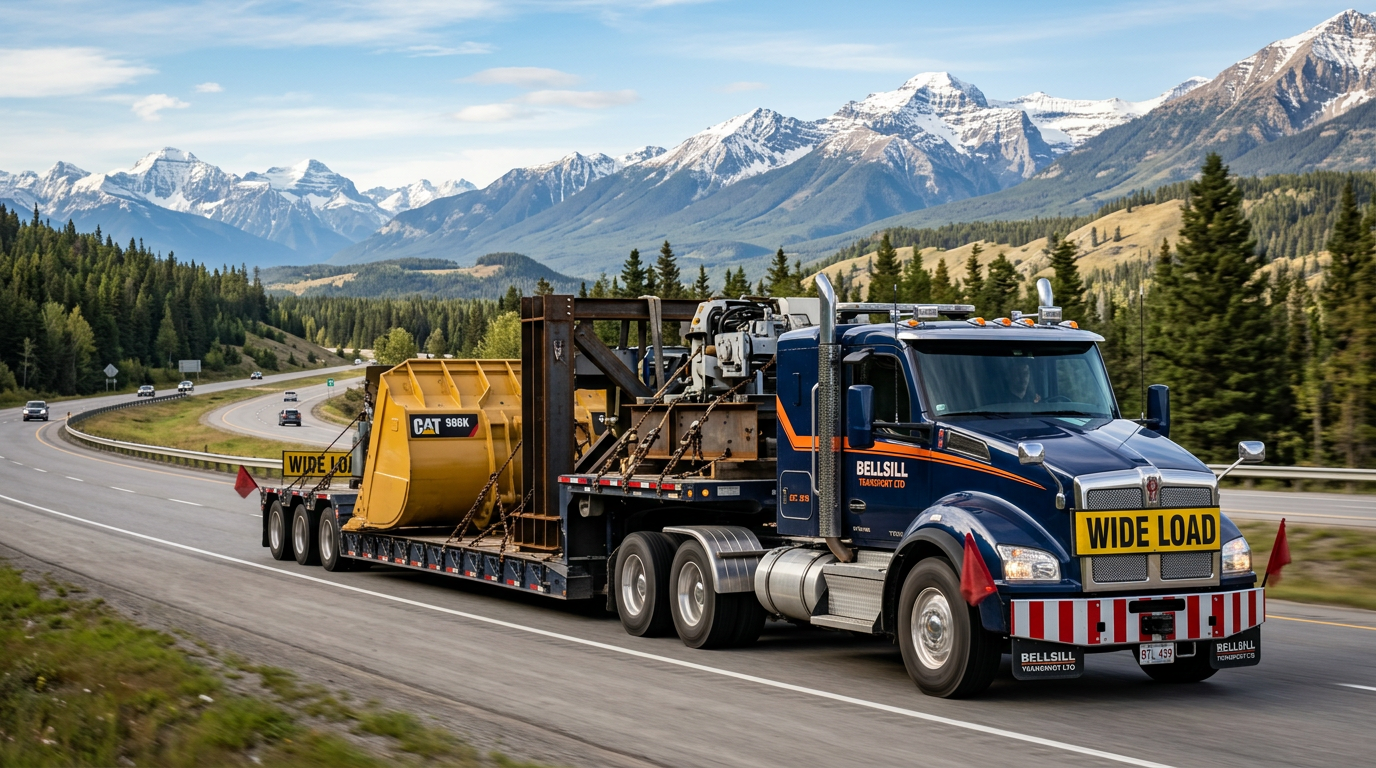
Construction Freight in Alberta: Industry Guide for Contractors & Developers
Alberta's construction industry is one of Canada's most active, driven by population growth, resource sector investment, infrastructure renewal, and commercial development. Edmonton's metro area alone has seen hundreds of millions in annual construction activity, ranging from residential subdivisions and mixed-use developments to major infrastructure projects and industrial facilities. Managing construction freight effectively is a critical competency for any general contractor, subcontractor, or project developer in Alberta.
Just-in-Time Delivery: The Modern Construction Site Standard
Modern construction project management has largely moved away from the "deliver everything to site at the start" model, which creates material damage risk, storage challenges, theft exposure, and site congestion. Just-in-time (JIT) delivery — coordinating material delivery to arrive as close as possible to when they're needed in the construction sequence — has become the standard for well-managed projects.
JIT delivery benefits for construction projects include:
- Reduced on-site storage requirements: Less material on site means less congestion, cleaner working environment, and smaller required laydown areas
- Lower theft and damage risk: Materials that arrive just before installation have minimal exposure to site theft and weather damage
- Improved cash flow: Materials paid for when delivered to site rather than weeks in advance, optimizing working capital management
- Better quality control: Fresh deliveries allow inspection at time of installation rather than discovering damaged materials that have sat on site for weeks
- Crane-direct delivery: For precast concrete, structural steel, and large building components, sequenced delivery allows crane-direct placement from the delivery truck — eliminating double-handling
BellSill Transport works closely with general contractors and site superintendents to establish delivery schedules that support JIT construction programs. We accommodate tight delivery windows, coordinated with specific construction activities, and provide reliable on-time performance that construction schedules depend on.
Lumber Transport: Alberta's Residential Construction Market
Alberta's residential construction sector — particularly Edmonton's suburban growth and Calgary's ongoing development — consumes enormous volumes of dimensional lumber, engineered wood products, and panel goods. The wood products supply chain flows primarily from British Columbia's sawmills (via Highway 1 or CN/CP Rail) through Alberta distribution yards to job sites across the province.
Key considerations for lumber transport in Alberta:
- Seasonal demand peaks: Alberta's construction season concentrates in spring through fall (April–November), with lumber demand peaking in late spring as framing crews ramp up. BellSill Transport maintains delivery capacity for peak season demand.
- Weather protection: Lumber must be protected from precipitation during transport to prevent moisture uptake, swelling, and potential mould growth. Our flatbeds are equipped with heavy-duty lumber tarps that provide complete weather protection during transit.
- Truss and engineered wood handling: Roof and floor trusses, LVL beams, and parallel strand lumber (PSL) require careful handling to prevent damage. Our drivers are trained in proper truss strapping and support techniques.
- Staging for crane-set trusses: Where roof trusses are crane-set directly from the delivery trailer, we coordinate delivery timing and truck positioning with framing contractors and crane operators.
Structural Steel Transport and Delivery Sequencing
Steel erection is one of the most sequencing-critical construction operations. Steel must arrive on site in the specific order required by the erection plan — columns before beams, lower floors before upper floors, exterior before interior. Delivery of out-of-sequence steel wastes crane time sorting material on site.
BellSill Transport works directly with steel fabricators and erectors to understand erection sequences and coordinate delivery accordingly. Our dispatch team manages multi-load delivery programs for major steel erection projects, staging loads from the fabricator's yard in the precise sequence required by the erection plan — a service that dramatically improves erection productivity and reduces costly crane delays.
Precast Concrete: Specialized Transport Requirements
Precast concrete elements present unique transport challenges due to their weight, size, and fragility:
- Weight: Precast elements are extremely heavy — a standard double-tee floor plank can weigh 15–25 tonnes per piece. Transport requires proper weight distribution across the trailer and compliance with axle weight limits.
- Dimensional size: Double-tees, hollow-core planks, and large wall panels often exceed standard trailer widths and lengths. Oversize permits are commonly required for precast panel transport.
- Support points: Precast elements must be supported at engineered bearing points during transport — improper support can crack or fracture the element. Our drivers work with precast engineers to identify correct support locations.
- Crane-set delivery: Most precast elements are crane-set directly from the delivery trailer, requiring precise site positioning and timing coordination with crane operators.
Infrastructure Construction Transport
Alberta's infrastructure construction programs — highway expansion, bridge replacement, utility corridor development, and municipal infrastructure renewal — generate significant freight volumes for specialized construction materials:
- Bridge girders and precast deck panels: Bridge reconstruction projects require transport of large, heavy precast elements on multi-axle trailers with full oversize permits
- Aggregates and asphalt: Gravel, crushed stone, and asphalt concrete for roadway construction transported in end-dump or belly-dump trailers
- Culvert pipe: Corrugated steel pipe, concrete culverts, and HDPE drainage pipe for stormwater and drainage infrastructure
- Guardrail and safety systems: Highway safety infrastructure components delivered to highway construction and rehabilitation projects
- Utility pipe and conduit: Water mains, sewer pipes, and electrical conduit for municipal infrastructure renewal projects