Understanding General Freight: A Guide for Canadian Shippers
Navigating the world of freight transportation can feel overwhelming for businesses shipping for the first time — or even for experienced shippers moving into new markets. BellSill Transport has put together this guide to help Canadian businesses understand the key concepts of general freight shipping and how to choose the right service for their needs.
What Qualifies as General Freight?
General freight (sometimes called standard freight or commodity freight) refers to goods that don't require special handling beyond standard cargo securement. This includes most commercial goods: palletized merchandise, crated machinery, packaged industrial supplies, consumer products, building materials, and many other commodities. General freight is typically moved in dry van trailers, though flatbed and open-deck equipment is used when cargo dimensions require it.
The key distinction of general freight is that it doesn't require temperature control (refrigerated transport), hazardous materials handling, or oversize/overweight permits. These specialized requirements fall under our Specialized Equipment and HAZMAT Transport services respectively.
FTL vs LTL: Choosing the Right Mode
Full Truckload (FTL) shipping is the right choice when:
- Your shipment weighs more than 10,000–15,000 lbs or occupies more than half a trailer
- Your cargo is time-sensitive and needs direct delivery without consolidation stops
- You're shipping fragile or high-value goods that benefit from exclusive trailer space
- You need guaranteed transit times on a specific lane
Less-Than-Truckload (LTL) shipping is the right choice when:
- Your shipment is 1–10 pallets or under 10,000–12,000 lbs
- You're shipping regularly on a consistent lane and want to save costs
- Your freight timeline allows for a day or two of additional transit time
- You don't need the exclusivity of a dedicated truck
Freight Classification and Pricing in Canada
Canadian freight pricing is influenced by several key factors: distance, weight, density, freight class, accessorial charges, and fuel surcharges. Understanding these factors helps you budget accurately and avoid surprises on your freight invoices.
Freight density is one of the most important factors. Lightweight, bulky cargo that takes up a lot of space but doesn't weigh much (like foam products or pillows) will be priced differently than dense, heavy cargo (like steel or machinery) of the same weight. Shippers often unknowingly underdeclare dimensions, which leads to re-billing disputes. BellSill Transport's quoting team helps you determine the correct density and classification upfront.
Fuel surcharges in Canada are typically tied to the weekly diesel fuel price index. BellSill Transport uses transparent, published fuel surcharge tables so you always know what you're paying.
Freight Packaging Best Practices
Proper packaging is the first line of defence against cargo damage. Here are best practices BellSill Transport recommends for general freight shippers:
- Palletize whenever possible: Palletized freight is easier to handle, less prone to damage, and moves faster through terminals. Use 48" × 40" standard GMA pallets when possible.
- Stretch wrap all pallets: Apply at least 3–4 layers of stretch wrap around the pallet load, wrapping down to the pallet itself to prevent shifting.
- Label clearly: Apply clear, weather-resistant labels on at least two sides of each pallet or carton. Include origin, destination, PO number, and contact information.
- Don't overhang pallets: Cargo should not extend beyond the pallet edge, as this creates damage risk during handling and transit.
- Block and brace crates: Large crates should be internally blocked and braced to prevent internal movement during transit over Canadian highways.
Cross-Canada Freight Lanes from Edmonton
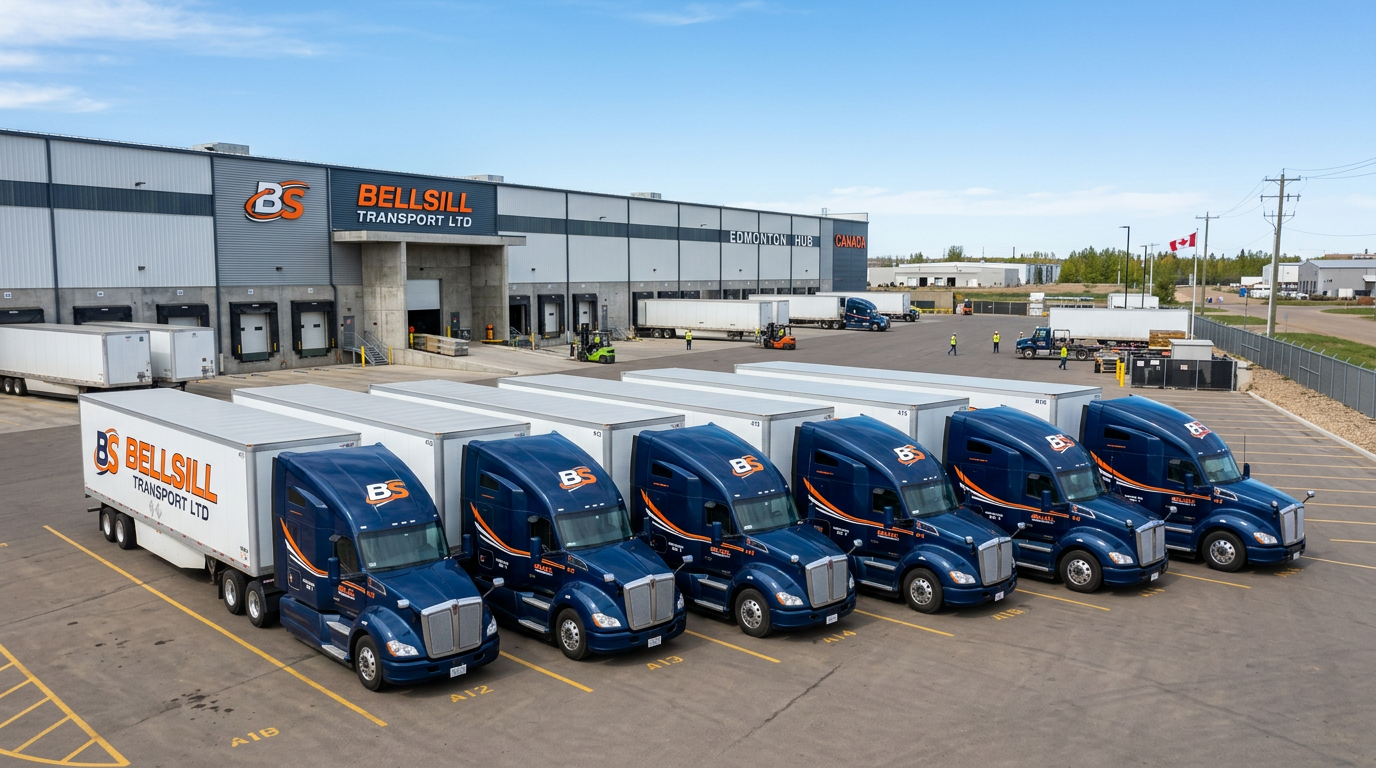
Edmonton, Alberta is one of Canada's most strategically positioned logistics hubs. Located at the intersection of major Trans-Canada corridors, Edmonton provides efficient access to:
- Edmonton to Calgary: ~3 hours via QEII — Alberta's busiest freight corridor, served daily by BellSill Transport.
- Edmonton to Vancouver: ~14 hours via the Yellowhead or Trans-Canada — serving British Columbia's Lower Mainland and Port of Vancouver.
- Edmonton to Winnipeg: ~14 hours via the Trans-Canada — gateway to Central Canada.
- Edmonton to Saskatoon/Regina: ~6–9 hours — serving Saskatchewan's agricultural and industrial shippers.
- Edmonton to Toronto: ~40 hours via Trans-Canada — Canada's longest and busiest interprovincial freight corridor.
- Edmonton to Northern Alberta: Fort McMurray, Grande Prairie, High Level — serving the energy sector.