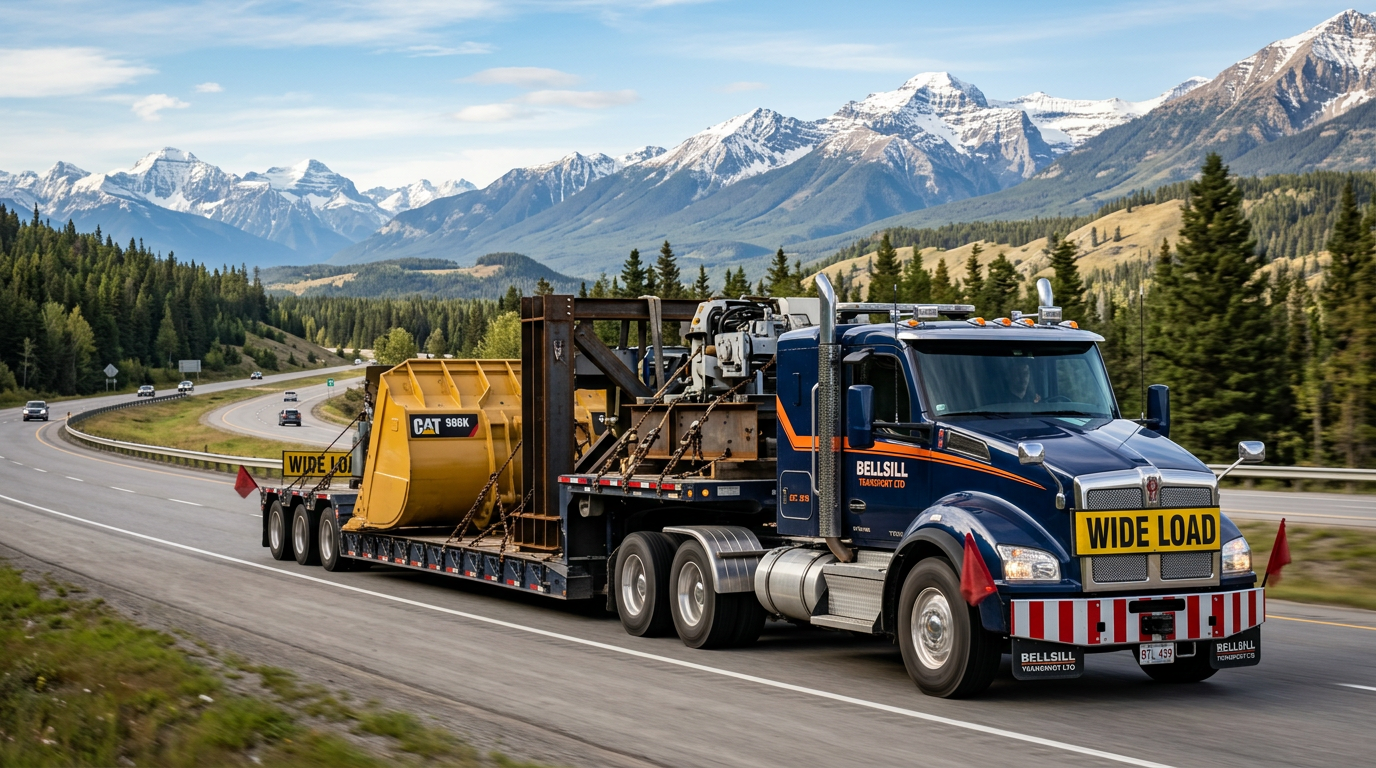
Specialized Equipment Transport: What You Need to Know
Specialized freight transport is a complex, highly regulated sector of the Canadian trucking industry. BellSill Transport LTD has built deep expertise in navigating these complexities so our clients can focus on their core business. Here's a comprehensive overview of the specialized transport landscape in Alberta and Canada.
Alberta Oversize & Overweight Regulations
Alberta Transportation governs oversize and overweight vehicle movements through the Special Vehicle Combination (SVC) permit system. Standard legal dimensions in Alberta are:
- Width: 2.6 metres (8'6") without permit; up to 5.0 metres with permit
- Height: 4.15 metres (13'7") without permit; up to 6.5 metres with permit
- Length: 23 metres for most combinations without permit
- Weight: Varies by axle configuration; up to 62,500 kg gross vehicle weight with permit
BellSill Transport's specialized department handles all SVC permit applications, including route pre-approvals from municipalities and utility companies. We work closely with Alberta Transportation and partner with licensed pilot car operators to ensure every oversize move is fully compliant and executed safely.
Refrigerated Transport: Temperature Integrity in Canada's Climate
Canada's extreme climate makes temperature-controlled transport both essential and challenging. In Alberta, temperatures can swing from -40°C in January to +35°C in July — conditions that stress even the best reefer equipment. BellSill Transport's refrigerated fleet is equipped with:
- Modern Thermo King and Carrier reefer units with redundant cooling capacity
- Continuous temperature monitoring with remote alarm systems
- Pre-cooled trailers before loading to maintain product temperature from the start
- Temperature data loggers providing downloadable documentation for food safety compliance
- Air ride suspension for smooth ride quality with fragile temperature-sensitive cargo
- Multi-temperature partition systems for split-zone loads
Our reefer drivers are trained in food safety protocols (HACCP awareness), pharmaceutical transport requirements (GDP guidelines), and proper handling of temperature-sensitive chemicals. We serve grocery distributors, food manufacturers, pharmaceutical wholesalers, and any shipper whose cargo has specific temperature requirements.
Flatbed Transport Safety & Cargo Securement
Flatbed cargo securement is one of the most critical safety responsibilities in trucking. Unlike enclosed trailers where cargo is contained, open-deck loads must be secured against all forces of transit: forward deceleration, lateral sway, vertical vibration, and rearward acceleration. BellSill Transport's flatbed drivers follow the National Safety Code (NSC) Standard 10 — Cargo Securement and manufacturer-specific securement guides.
Our flatbed securement toolkit includes:
- Grade-70 transport chains and binders for heavy machinery and steel
- High-strength polyester web straps for general flatbed freight
- Rubber friction mats for improved grip on smooth loads
- Custom-built wooden blocking and cribbing for irregular cargo shapes
- Heavy-duty tarps (lumber tarps, machinery tarps, smoke tarps) for weather protection
- Edge protectors to prevent strap cutting on sharp cargo corners
All flatbed loads are inspected at pickup, after the first 50 km, and at every fuel stop or rest break. Driver training includes recognizing load shift and adjusting securement accordingly.
Tanker Transport in Western Canada
Tanker transport is a specialized discipline requiring dedicated training, equipment, and regulatory compliance. Alberta's oil and gas sector, agricultural industry, and chemical manufacturing base generate significant demand for liquid and bulk transport. BellSill Transport's tanker operations cover:
- Petroleum products: Crude oil, diesel, heating oil, lubricants, additives
- Food-grade liquids: Vegetable oils, liquid sugar, dairy products, juice concentrates
- Chemicals: Industrial acids, caustic soda, fertilizer solutions, solvents
- Water and wastewater: Potable water transport, produced water, environmental services
- Dry bulk: Cement, lime, fly ash, grain, plastic pellets, sugar
Specialized Permits and Compliance
Operating specialized equipment in Canada requires strict adherence to a complex framework of federal and provincial regulations. BellSill Transport maintains full compliance across all jurisdictions we operate in:
- Alberta Motor Vehicle Transport Act compliance
- National Safety Code (NSC) certification for all operators
- Transportation of Dangerous Goods (TDG) certification for HAZMAT loads
- CVSA (Commercial Vehicle Safety Alliance) inspection readiness
- CVOR (Commercial Vehicle Operator's Registration) in Ontario
- SAF-T-CAM or equivalent safety management systems