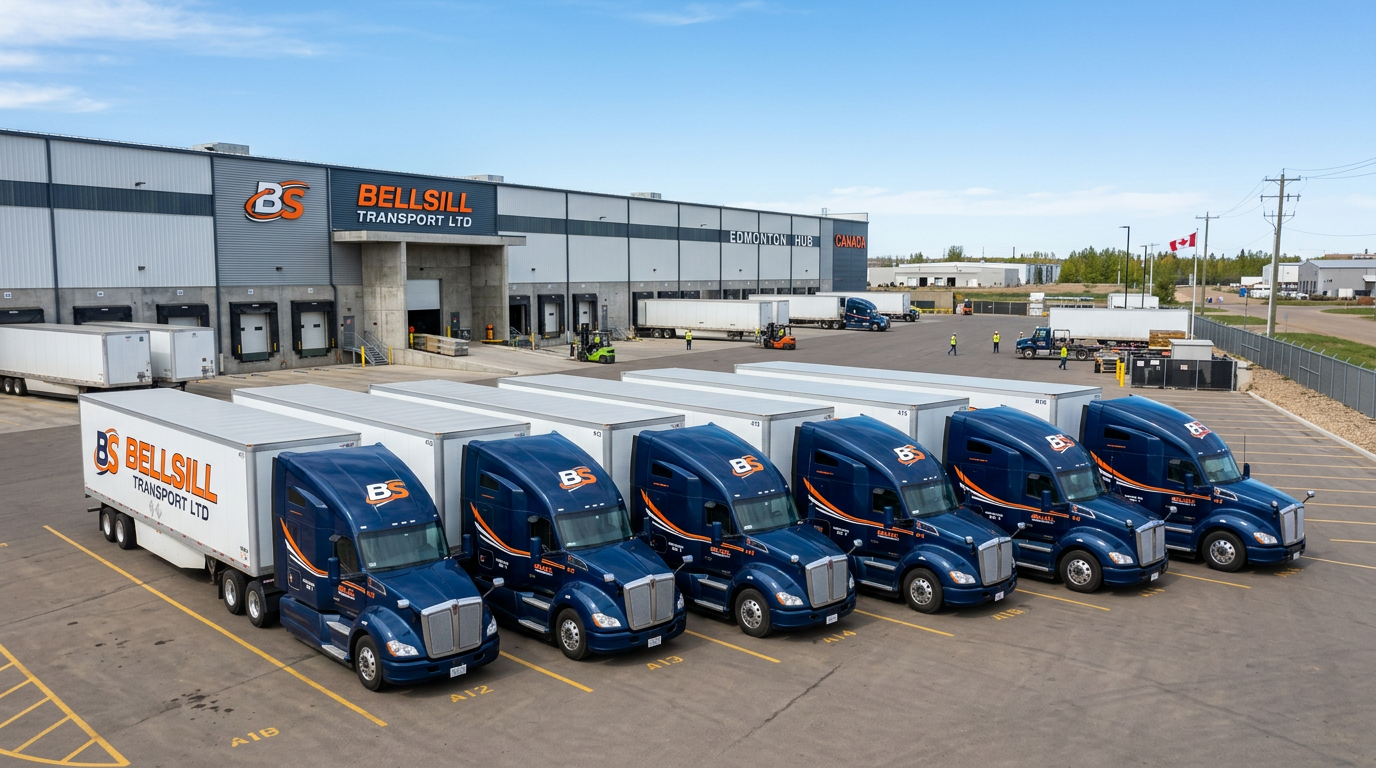
Cross-Docking in Canada: Strategy, Benefits, and Implementation
Cross-docking is one of the most powerful logistics strategies available to Canadian distributors and retailers, yet it remains underutilized by many businesses outside the largest national chains. BellSill Transport LTD brings enterprise-level cross-docking capability to businesses of all sizes in Alberta and Western Canada. Here's a comprehensive look at cross-docking strategy, benefits, and implementation.
The History and Evolution of Cross-Docking
Cross-docking as a formal logistics strategy was pioneered by Walmart in the 1980s as part of their revolutionary supply chain efficiency program. By receiving supplier freight at distribution hubs and immediately transferring it to store delivery trucks without storage, Walmart dramatically reduced inventory carrying costs and distribution cycle times — creating a competitive cost advantage that transformed retail. Today, cross-docking is standard practice among leading retailers, grocery chains, automotive manufacturers, and e-commerce companies worldwide.
In Canada, cross-docking gained significant traction during the 2000s and 2010s as retailers responded to the growth of fast fashion, fresh food distribution, and e-commerce fulfillment requirements. The Alberta distribution market, centred on Edmonton and Calgary, has developed sophisticated cross-dock operations serving the province's major retail chains, grocery distributors, and industrial suppliers.
Six Key Benefits of Cross-Docking for Alberta Businesses
- Reduced warehousing costs: Eliminating or minimizing storage means lower facility rent, utilities, insurance, and labour costs. For high-velocity products, cross-docking can reduce distribution centre space requirements by 40–60%.
- Faster order-to-delivery cycle times: Products move through the cross-dock in hours rather than days, reducing total supply chain lead time and enabling faster response to customer demand signals.
- Reduced inventory carrying costs: Less product sitting in storage means lower inventory financing costs, reduced obsolescence risk, and improved cash flow — particularly important for seasonal or trend-sensitive products.
- Lower freight costs through consolidation: Cross-docking enables consolidation of multiple small shipments into full truckloads, dramatically reducing per-unit transportation costs versus shipping individual LTL loads.
- Improved product freshness: For food and pharmaceutical distributors, cross-docking preserves product shelf life by minimizing time in storage. Direct supplier-to-store flow gets fresh products to consumers faster.
- Reduced freight damage: Fewer handling touches mean fewer opportunities for product damage. Cross-docking typically reduces damage rates compared to traditional warehouse pick-and-pack operations.
When Cross-Docking Is the Right Solution
Cross-docking delivers maximum value in specific supply chain scenarios:
- High-velocity, predictable demand: Products that sell consistently and quickly are ideal for cross-docking — retailers can pre-allocate inbound freight to specific stores based on forecasted demand without physical storage.
- Multi-supplier to single-destination consolidation: When a retailer or manufacturer receives products from multiple suppliers all destined for the same distribution centre or region, cross-docking consolidates them efficiently.
- Seasonal product surges: During holiday season peaks or product launches, cross-docking provides surge capacity without requiring permanent warehouse space expansion.
- Perishable goods: Fresh produce, dairy, meat, and seafood benefit enormously from cross-docking's speed, minimizing the time from farm or processor to retail shelf.
- E-commerce fulfillment: Direct-to-consumer freight that's been pre-packed by suppliers can flow through cross-docking directly to last-mile delivery vehicles without additional DC handling.
Cross-Docking Challenges and How BellSill Transport Addresses Them
Successful cross-docking requires sophisticated coordination — a failure in inbound carrier timing can cascade into an outbound delay that defeats the entire purpose. Key challenges include:
- Inbound timing coordination: All inbound carriers must arrive within a defined receiving window. BellSill Transport's dispatch team manages carrier appointments and communicates proactively with all inbound carriers to maintain precise arrival schedules.
- Pre-labelling and pre-sorting requirements: Freight must arrive properly labelled for cross-dock operations. BellSill Transport works with shippers to establish pre-labelling standards and verifies compliance before accepting cross-dock bookings.
- Information systems integration: Cross-docking requires real-time data on inbound freight composition, outbound allocations, and dock assignments. Our TMS system manages these data flows and can integrate with client ERP systems via EDI or API.
- Weather and seasonal disruptions: Alberta's winter weather can affect carrier arrival schedules. BellSill Transport maintains contingency plans and buffer capacity to manage weather-related disruptions to cross-dock windows.
Edmonton: Canada's Western Cross-Docking Hub
Edmonton's strategic geographic position makes it an ideal location for Western Canadian cross-docking operations. From Edmonton, outbound freight can reach:
- Calgary and Southern Alberta: 3 hours
- Lethbridge: 4 hours
- Red Deer: 1.5 hours
- Grande Prairie: 4.5 hours
- Fort McMurray: 4.5 hours
- Lloydminster: 2.5 hours
- Saskatoon: 5.5 hours
- Vancouver: 13-14 hours
- Winnipeg: 13-14 hours
This positioning allows BellSill Transport to operate a single Edmonton cross-dock facility that serves the entire Western Canadian market efficiently, consolidating national or international inbound freight for distribution throughout the region.