Building Resilient Supply Chains in Alberta and Canada
The COVID-19 pandemic exposed the fragility of global supply chains, and Canadian businesses — particularly those in Alberta dependent on global commodity markets and cross-border trade — felt the disruption acutely. As supply chains have stabilized and evolved, the lesson is clear: supply chain resilience is not a luxury; it is a strategic imperative. BellSill Transport helps Alberta businesses build more resilient, agile, and cost-effective supply chains through integrated logistics partnerships.
What is Third-Party Logistics (3PL) and Is It Right for You?
Third-Party Logistics (3PL) is the outsourcing of logistics functions — transportation management, warehousing, distribution, freight payment, and reporting — to a specialized external provider. For many businesses, particularly small and mid-sized companies, building in-house logistics expertise is cost-prohibitive and distracting from core operations.
Signs that a 3PL partnership with BellSill Transport may benefit your business:
- You spend significant internal staff time managing freight bookings, tracking shipments, and resolving carrier issues
- Your freight spend is growing but you don't have the volume to negotiate strong carrier rates independently
- You experience seasonal volume swings that require more capacity than you can maintain year-round
- You're expanding into new geographic markets (new provinces or cross-border) without established carrier relationships
- You've had freight damage, loss, or service failures that damaged customer relationships
- Your supply chain data is fragmented across multiple carrier systems with no single visibility dashboard
BellSill Transport's 3PL model provides dedicated logistics account management, access to our carrier network of vetted providers, consolidated freight invoicing, and regular performance reporting — all for a transparent management fee structure.
Cross-Docking: The Art of Freight Without Storage
Cross-docking is one of the most powerful tools in a logistics manager's toolkit. By eliminating the storage step between inbound and outbound freight movements, cross-docking can:
- Reduce warehousing costs by 50–80% compared to traditional storage-based distribution
- Shorten order-to-delivery cycle times, improving customer service levels
- Reduce double handling of freight, lowering damage risk
- Maintain product freshness for food and beverage distributors
- Enable consolidation of freight from multiple suppliers into single outbound loads, reducing per-unit transport costs
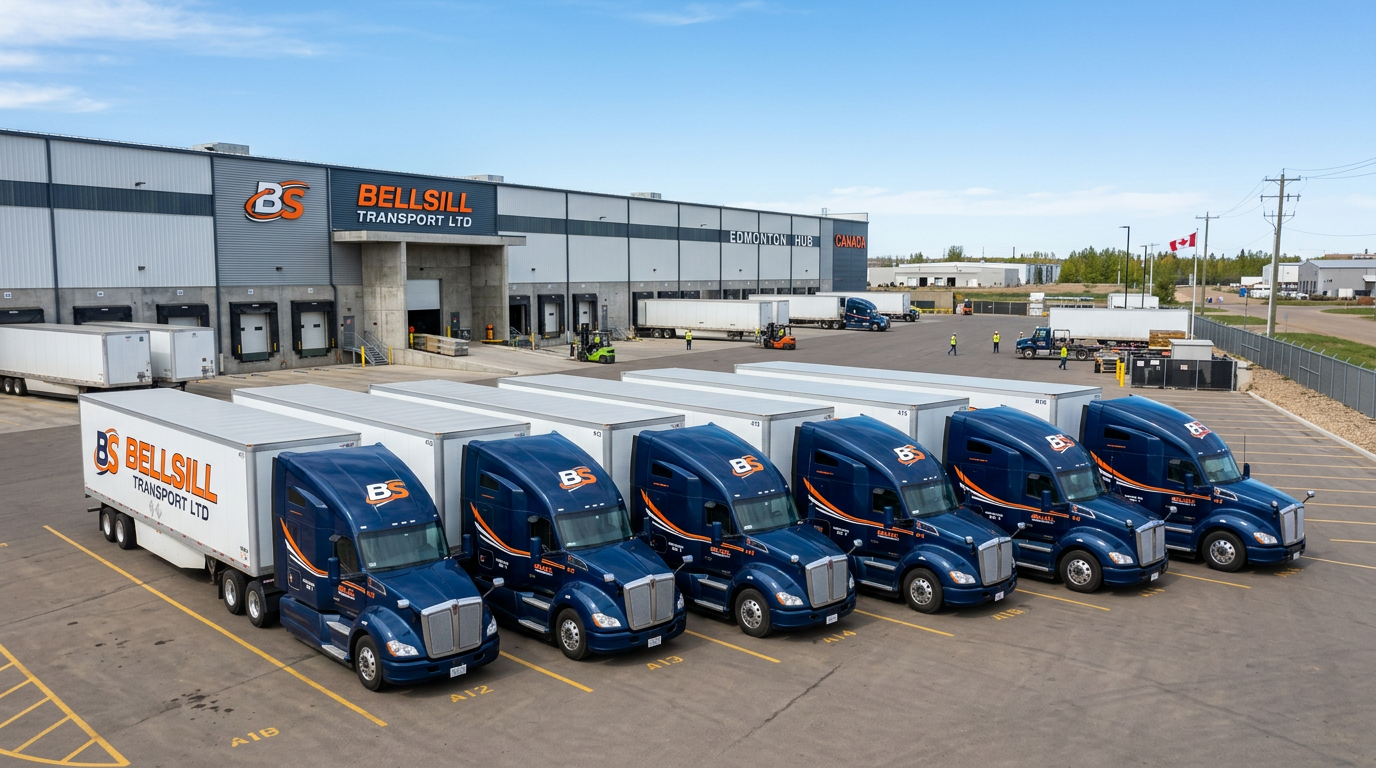
BellSill Transport's Edmonton cross-dock facility is strategically positioned to serve Alberta retailers, grocery chains, and distributors with regular scheduled cross-dock services. We coordinate inbound carrier arrival windows, cross-dock execution, and outbound dispatch to stores, distribution centres, and customers across Alberta and Western Canada.
Cross-Border Freight: Canada-USA Supply Chains
The Canada-United States trade relationship is one of the world's largest bilateral trading partnerships, with over $2.5 billion in goods crossing the border daily. Alberta businesses export significant volumes to the US market — particularly in energy products, agricultural commodities, and manufactured goods — and import US-manufactured equipment, consumer goods, and raw materials.
BellSill Transport's freight forwarding service manages the complexity of cross-border trade:
- PARS/PAPS: Pre-Arrival Review System (Canada) and Pre-Arrival Processing System (USA) for expedited border clearance
- ACI (Advance Commercial Information): Electronic cargo reporting to CBSA required for all inbound freight to Canada
- ACE (Automated Commercial Environment): Electronic filing with US Customs and Border Protection for exports
- USMCA/CUSMA compliance: Ensuring trade documents comply with the Canada-United States-Mexico Agreement for preferential tariff treatment
- Customs broker coordination: We work with licensed customs brokers on both sides of the border to handle duty calculations, tariff classifications, and clearance documentation
- FAST/C-TPAT lane access: Working with partners enrolled in FAST (Free and Secure Trade) for expedited border processing
Warehousing in Edmonton: Strategic Location for Western Canada Distribution
Edmonton is Western Canada's distribution hub — centrally located between Vancouver (1,200 km west), Winnipeg (1,500 km east), Calgary (300 km south), and Fort McMurray (450 km north). This geographic position makes Edmonton-based warehousing an excellent staging point for distribution across Western and Central Canada.
BellSill Transport's Edmonton warehousing capabilities include:
- Heated, secure warehouse space suitable for most general merchandise, industrial goods, and temperature-sensitive products above 0°C
- Pallet racking for systematic inventory organization and FIFO/LIFO management
- Forklift-accessible loading docks for efficient inbound and outbound handling
- Inventory management system integration for real-time stock visibility
- Pick, pack, and ship fulfillment for e-commerce and direct-to-consumer distribution
- Transloading services — transferring freight between different transport modes or container types
Freight Payment and Audit Services
For businesses managing multiple carrier relationships, freight invoice management can become a significant administrative burden and a source of billing errors. BellSill Transport offers freight payment and audit services that:
- Consolidate all carrier invoices into a single monthly invoice from BellSill Transport
- Audit all freight bills for rate compliance, accessorial accuracy, and billing errors
- Generate detailed freight spend reports by lane, carrier, service type, and time period
- Identify cost reduction opportunities through lane analysis and mode optimization
- Manage carrier claims and disputes on your behalf